Experimental Farming at Allerton Project Reverses UK Bird Decline
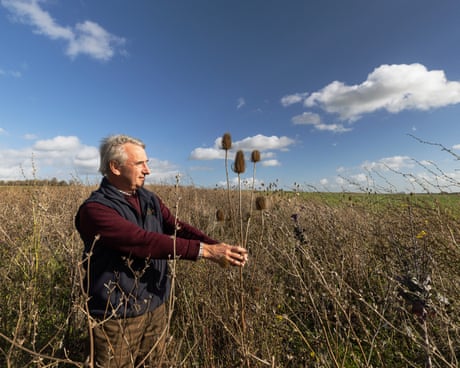
A 320‑hectare demonstration farm on the Leicestershire‑Rutland border shows how simple changes can boost farmland bird numbers.
Seeing the Difference in the Field
Alastair Leake, director of the Allerton Project, stands in a winter wheat field split into two halves. One side was ploughed before sowing, showing neat rows of green shoots. The other side was drilled directly into undisturbed soil, leaving a “messy carpet” of stems, stubble and crop residue.
“When we’re watching to see where the birds are landing to feed, none of them are going on to the ploughed side,” Leake says, pointing to the trashy side where birds are feeding.
He explains that the unploughed area holds seeds, earthworms and insects, while the ploughed side has buried those resources.
Bird Numbers Defy the National Decline
Monitoring that began in 1992 shows farm bird abundance at Allerton has risen 145%, contrasting with a 23% decline across the UK over the same period.
Leake calls the outcome “a robust recipe” that has emerged from decades of testing.
Three Decades of Integrated Research
The Allerton Project is a working farm and research centre on the Leicestershire‑Rutland border. Over 320 hectares, farmers and scientists have tested sustainable agriculture, habitat creation and landscape management for more than thirty years.
Visitors from farms, policy circles and businesses regularly tour the site, and Leake stresses that the goal is not to showcase a nature reserve but to demonstrate practices that can be replicated elsewhere.
Key Features: Bird Table and Beetle Bank
A “bird table” runs as a dedicated wildlife seed mix strip across the farm. Unkempt rows of kale, teasel, sorghum and millet provide seeds that sustain song thrush, blackbirds, linnets and goldfinches through the winter “hungry gap” of January to March.
Adjacent to the bird table, a “beetle bank” consists of uncultivated land planted with long‑tussock perennial grasses. As the grasses die back, they form a fibrous blanket where beetles hibernate.
Leake notes that when spring warms, beetles emerge, move into crops and eat pests, reducing the need for pesticide sprays while also supplying insects for birds.
Implications for UK Farmland Birds
Across the UK, increased pesticide use and habitat loss have driven many farmland bird species toward extinction, according to the RSPB. At Allerton, bird numbers are at their highest level since records began, with notable rises in song thrush, blackbirds and linnets.
Leake hopes that the demonstrated practices will inspire other farmers to adopt similar measures, helping to reverse the national decline.