Student Guide’s Black‑Hole Lesson Takes an Unexpected Turn at Sydney Observatory
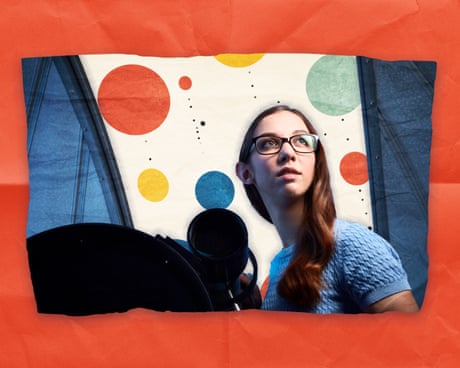
An eight‑year‑old’s off‑beat question about blood as sauce forced a student astronomy guide to rethink his black‑hole explanation.
In the first year of a science degree, the author secured a position as an astronomy guide at Sydney Observatory, where the routine involved leading groups of roughly twenty people through night‑time sky sessions.
When clear skies permitted, the tours featured direct telescope views of stars and planets, even the stars depicted on the Australian flag atop the Sydney Harbour Bridge. Cloudy evenings redirected the experience to the observatory’s 3D theatre and planetarium, allowing visitors to explore the universe beyond the reach of the naked eye.
Planetarium Highlights
The guide’s favorite planetarium feature was the Hubble Ultra Deep Field image. He described how the Hubble space telescope stared at a sky patch the size of a grain of sand held at arm’s length for eleven days, gathering enough light to reveal the most distant galaxies. After zooming in, he pointed out four bright “spiky” objects as stars belonging to the Milky Way, then declared that every other speck, blob, or smudge represented a galaxy, prompting audible gasps from the audience.
Black‑Hole Talk and an Unusual Question
On a night when clouds prevented telescope use, the guide moved the group to the 3D theatre and the conversation shifted to black holes. He covered the first discovered black hole, the origin of the term, and the phenomenon of spaghettification—explaining that an object falling feet‑first would experience a stronger gravitational pull on its feet than its head, stretching it like spaghetti.
At that moment, a hand rose from a young girl, about eight years old. Without hesitation she asked, “So would the blood be the sauce?” The room reacted with giggles, and the guide found himself momentarily speechless.
Rethinking the Explanation
The unexpected question forced the guide to reconsider the analogies he used to describe black‑hole physics, especially the suitability of “spaghettification” for a mixed audience that included children.
He reflected that answering questions—whether they are common, simple, or surprisingly complex—is a core part of his role as both a scientist and a science communicator.
While the tour continued, the incident remained a memorable reminder that even well‑rehearsed explanations can be upended by a single, off‑beat inquiry.