Smithsonian Unveils “At Home in Space” Gallery After Massive Renovation
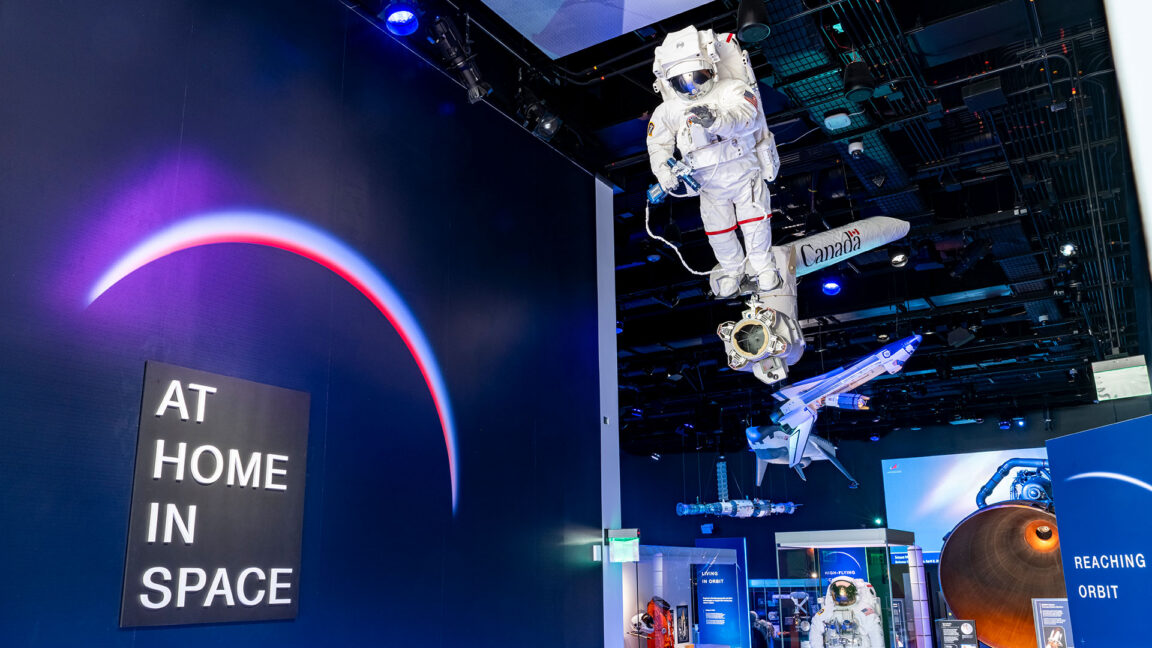
The National Air and Space Museum opens its long‑awaited “At Home in Space” exhibit, marking the final phase of a seven‑year, $1 billion renovation.
Renovation milestone
After seven years of work and a price tag approaching $1 billion, the Smithsonian’s National Air and Space Museum has reopened its flagship building in Washington, DC. The final gallery, At Home in Space, debuted on October 30, completing the museum’s extensive overhaul.
What the new gallery tells
Curator Jennifer Levasseur led a virtual walkthrough, calling the exhibition “the story of long‑duration spaceflight in the last few decades.” She framed it as the “prep story, the space shuttle story,” which leads to the International Space Station era and looks ahead to future steps beyond Earth.
Context within the museum’s recent additions
In recent years the museum has added several themed galleries: “Destination Moon” (first US astronauts and Moon landings), “Kenneth C. Griffin Exploring the Planets” (robotic planetary probes), “RTX Living in the Space Age Hall” (everyday tech impacts), and “Futures in Space” (future approaches to spaceflight). “At Home in Space” follows the similarly themed “Moving Beyond Earth” and focuses on the hardware that enabled humans to transition from visiting space to living there.
Signature displays
Levasseur highlighted an overhead mock‑up of an astronaut attached to a robotic arm, set against a full‑size photo mural of the ISS. The astronaut figure wears an Expedition 60 patch, offering a clue to its identity.
A space shuttle main engine.
Robonaut 1A, a prototype humanoid robot.
An extravehicular mobility unit (EMU) spacesuit, which Levasseur called “pretty damn special.” She noted it is the first public display of a fully flown EMU set, with NASA’s own example remaining in a non‑public EVA office.
Details on the EMU
The EMU, unlike Apollo‑era suits sized to individual astronauts, was built for reuse, allowing component swaps to fit different crew members. Introduced early in the shuttle program, the same design still serves US spacewalks on the ISS. The museum’s display lacks a functioning portable life support system (PLSS); only the PLSS shell is present because the backpacks remain in active use.
Historic flight suits
The gallery also showcases the in‑flight suits of Guy Bluford and Sally Ride, the first African‑American and first US woman to fly on the shuttle, respectively. Ride’s jacket is absent—a deliberate design choice after the museum received only a drawing and 3D mock‑up of the jacket, which they felt created a “nice contrast.”
Recovered tragedy debris
Recovered components from the Challenger and Columbia disasters are on view, marking only the second public exhibition of fallen orbiter debris after a 2015 Kennedy Space Center Visitor Complex display.
Final thoughts
With “At Home in Space” now open, the museum claims to have restored all of its ‘space’ back open, offering visitors a comprehensive look at how humanity moved from short trips to sustained presence in orbit, and hinting at the next chapter of lunar and Martian bases.