Six‑Decade Journey of NASA’s Johnson Space Center
From its 1961 birth as the Manned Spacecraft Center to today’s role in Artemis, Johnson Space Center has continuously evolved.
Origins and Early Construction
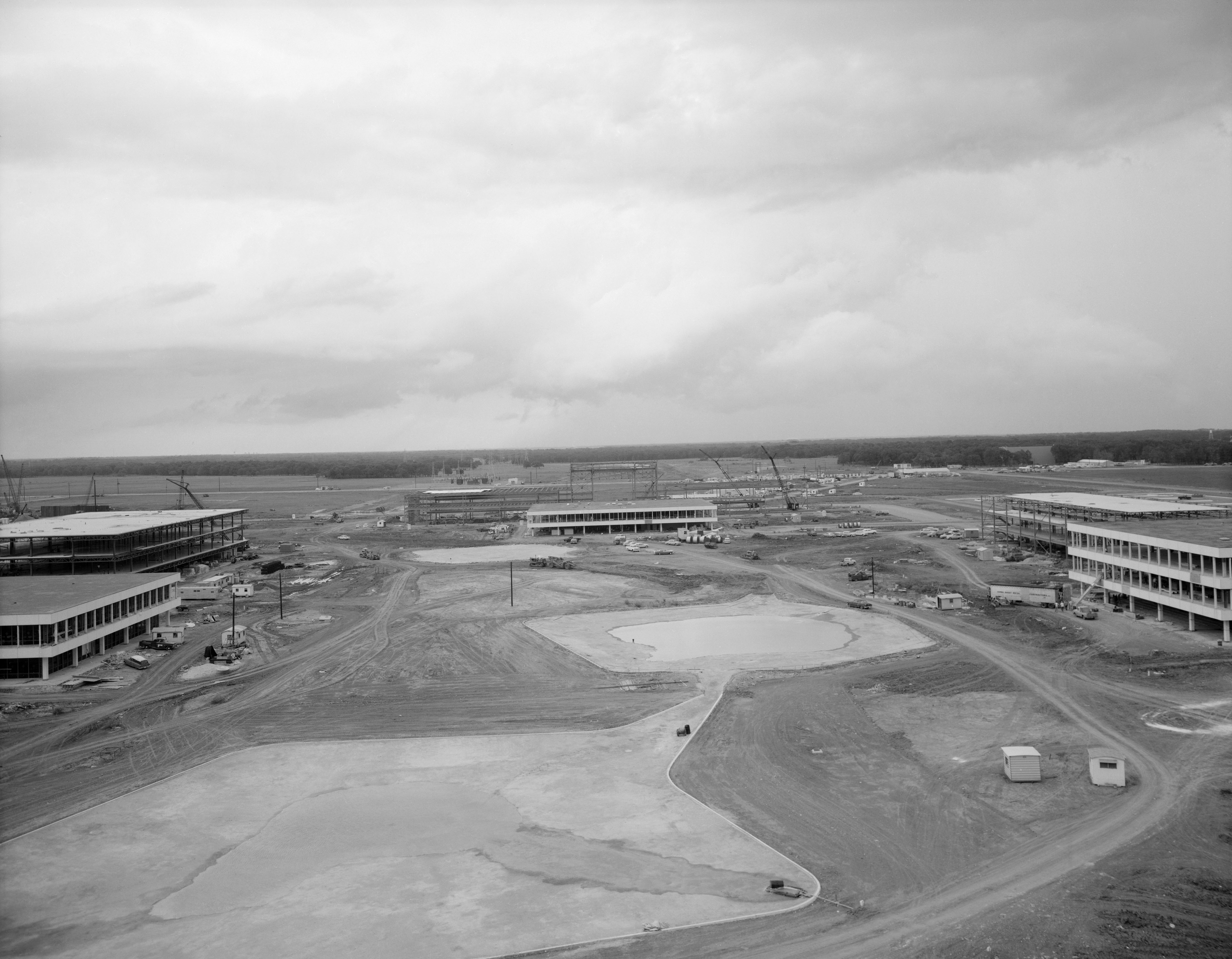
On May 25, 1961 President John F. Kennedy announced a national goal to land a man on the Moon and return him safely before the decade’s end. At that time NASA’s Space Task Group was already running Project Mercury, but the new lunar objective required a larger facility. After evaluating sites across the country, NASA announced on September 19, 1961 that a dedicated Manned Spacecraft Center would be built near Houston, Texas. The agency formally established the center on November 1, 1961, and construction began the following year.
While the Clear Lake site was being built, staff operated out of 13 leased buildings in southeast Houston. The design phase lasted six months; the first buildings were erected over 18 months, allowing employees to move onto the new campus in late 1963. The campus has expanded continuously to meet the needs of successive spaceflight programs.
Key Early Buildings
Project Management Building (originally Building 2): Construction started December 5, 1962 and finished March 15, 1964. Robert Gilruth, the center’s first director, occupied the top‑floor office on March 5, 1964.
Public Affairs Building (originally Building 1): Swapped numbers with the administration building on June 30, 1974.
Water Immersion Facility: Installed in 1967, this above‑ground pool supported Gemini XII spacewalk training and later Apollo and pre‑Shuttle EVA work.
Training Facilities Evolution
Neutral‑buoyancy training began with Gemini XII in 1966. The 1967 Water Immersion Facility served Apollo and early shuttle preparations. To accommodate the larger shuttle payload bay, the Weightless Environment Training Facility opened in 1980 and was used until 1997, when the Neutral Buoyancy Laboratory in the Sonny Carter Training Center began supporting shuttle, space‑station and future lunar activities.
Lunar Receiving Laboratory
Built to prevent back‑contamination from lunar material, the Lunar Receiving Laboratory occupied Building 37. Construction began August 1966 and staff moved in June 1967. Apollo 11, 12 and 14 crews completed three‑week post‑flight quarantines there, and scientists examined returned Moon rocks. After the Apollo era, the Life Sciences division used the building until 2017. Following demolition, the Lunar Receiving Park was dedicated in 2026 to honor the laboratory’s legacy.
Mock‑up and Simulation Facilities
Building 9: Construction from December 1965 to March 1967 created the Technical Services Facility. In April 1969 a mock lunar surface with a Lunar Module replica was added for Apollo 11 training. An addition in September 1974 created the Mockup and Integration Laboratory for shuttle missions, and a 1986‑1988 expansion added mockups of Space Station Freedom and the International Space Station. Today the Space Vehicle Mockup Facility houses Orion mockups, commercial prototypes and the Active Response Gravity Offload System (ARGOS).
Building 5 (Mission Simulation and Training Facility): Completed April 1965, it supported Gemini IV in June 1965. The building received Gemini, Apollo and later simulators, including command and lunar module trainers beginning December 1965.
From Manned Spacecraft Center to Johnson Space Center
The center officially opened on November 1, 1961, while construction continued. In 1973 the facility was renamed NASA’s Lyndon B. Johnson Space Center in honor of President Johnson’s strong support of the space program.
Current Role and Future Directions
Today Johnson Space Center serves as NASA’s Center of Excellence for Human Spaceflight. It houses the astronaut corps, Mission Control Center and teams driving missions from low‑Earth‑orbit operations on the International Space Station to the Moon Base Program, Orion Program and human health research for deep‑space travel. The campus continues to expand, reflecting its central role in the nation’s evolving human spaceflight ambitions.