Seabirds Get Jet‑Lagged on Their Long Homeward Flights
A new study shows that Manx shearwaters experience internal‑clock drift that nudges their Sun‑based compass during long ocean crossings.
Zooming across the North Atlantic, Manx shearwaters are now known to suffer a form of jet lag that subtly twists their Sun‑based compass.
What the Study Found
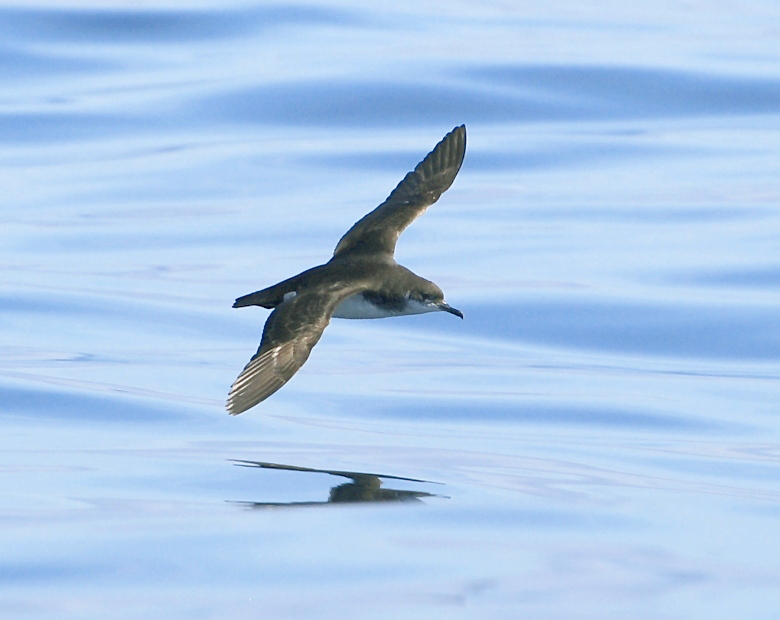
Researchers led by Patrick Lewin, a behavioral and sensory ecologist at the University of Oxford, tracked thousands of Manx shearwaters—medium‑sized seabirds about the size of a pigeon, white underneath and black on top, with very long wings and close relatives of albatrosses.
These birds nest in burrows on coastal islands around the North Atlantic, most of them breeding in the UK and Ireland, with roughly half of the population residing in Wales. After feeding trips that can stretch from a few dozen to more than 1,000 kilometres offshore, the birds head home using a “map sense” and the Sun as a compass.
Sun Navigation and the Internal Clock
Because the Sun moves across the sky, a traveler must know the time of day to keep a steady bearing. At sunrise the Sun is in the east, so a south‑bound animal must travel 90 degrees clockwise of the Sun; by midday it points straight toward the Sun, and at sunset it must be 90 degrees anticlockwise, Lewin explained.
Manx shearwaters reset their internal clock at every dawn and dusk. This reset means that for each degree of longitude crossed between sunrise and sunset, the bird’s clock falls four minutes out of sync with local time, causing a predictable misjudgment of the Sun’s position.
Data from Two Decades of GPS Tags
Since 2004, Lewin’s supervisor Tim Guilford and long‑time shearwater researcher Chris Perrins have fitted the birds with GPS tags small enough for their size. The resulting database contains tracks from 3,688 foraging trips made by 1,045 birds, with trips lasting from one day to two weeks.
From this massive dataset, the team isolated “homeward flights”—straight, fast segments where birds fly continuously toward their colony. By noting the last sunrise each bird saw (when its clock matched local time) and measuring east‑west travel at each GPS fix, the researchers could predict how the Sun compass should be bent.
Detecting the Jet‑Lag Effect
Across 335 offshore homing flights, the birds veered exactly as the Sun‑compass predictions indicated. The observed time shifts were tiny—most around 10‑15 minutes, with a maximum of about an hour. These shifts translated into navigational biases of up to 15 degrees.
Alternative explanations such as crosswinds, the Coriolis effect, or a magnetic compass were modeled, but none matched the data as closely as the Sun‑compass bias.
How Much Does the Drift Cost?
Even the largest observed drift (about 15 degrees) added only a modest distance to the journey. For a bird flying 1,000 kilometres east in a day—the upper range of the study—the average error would be roughly seven degrees, amounting to an extra five kilometres when the bird continuously checks its position.
When shearwaters followed coastlines, they still drifted slightly nearer to or farther from shore in line with the predicted compass error, echoing earlier findings with homing pigeons that also run parallel navigation systems based on compass cues and familiar landmarks.
Why It Matters
This research provides the first clear demonstration that wild animals moving under their own power experience jet‑lag‑like internal‑clock drift, and that the effect is measurable through changes in Sun‑based orientation. It highlights the remarkable precision of avian navigation and the subtle ways long‑distance travel can perturb biological clocks.
So the next time you watch a shearwater slice through the sky, remember it’s not just battling wind and waves—it’s also keeping time with a clock that’s a little out of sync.