Record Two‑Thirds of September Car Sales in China Are Electric
New‑energy vehicles accounted for 67 % of all new car sales in China in September, the highest share ever recorded.
NEV share hits a new high
According to the China Passenger Car Association (CPCA), new‑energy vehicles (NEVs) – which include battery electric cars (BEVs) and plug‑in hybrids (PHEVs) – made up 67 % of all new car sales in China in September, a record proportion.
This follows a rise from 6 % in 2020 to 58 % in 2026 to date, with the share briefly dipping to 39 % in January after the long‑standing purchase‑tax exemption ended in December 2025.
Overall market contraction
September saw a 28 % year‑on‑year drop in total passenger‑car retail sales across all categories.
Combustion‑engine vehicles were hardest hit, falling 43 % in September and 31 % in the first nine months of 2026.
PHEV sales declined 36 % in September and 26 % year‑on‑year to date, while BEV sales were down 8.5 % in September and 4 % in the first nine months.
Overall NEV sales fell 17 % in September and 13 % in the first nine months of the year.
Impact of the Hormuz crisis
CPCA secretary‑general Cui Dongshu linked the weak September performance of combustion cars to higher petrol prices caused by the ongoing Strait of Hormuz crisis.
Oil imports into China fell 15 % in January‑September compared with 2025, equivalent to 470 million barrels. The growing NEV fleet has offset demand for 143 million barrels of oil since the crisis began, according to Ember senior analyst Euan Graham.
Carbon Brief cited an unnamed analyst who estimated that EVs accounted for 12 % of the reduction in China’s oil use post‑Hormuz.
Exports surge as domestic demand wanes
While domestic NEV sales dropped 17 % in September, exports jumped 164 % year‑on‑year, according to CPCA data.
In September, 1,084,000 NEVs were sold inside China and 558,000 were shipped abroad.
Chinese manufacturers are now treating exports as a “core priority,” a shift that has prompted the EU to impose tariffs on Chinese EVs and to plan restrictions on hybrids. Mexico and Turkey have also placed tariffs on Chinese EV imports.
The Chinese government is reducing VAT export rebates, a move some analysts think will have limited effect, while others warn it could raise export prices.
Analysts weigh future growth
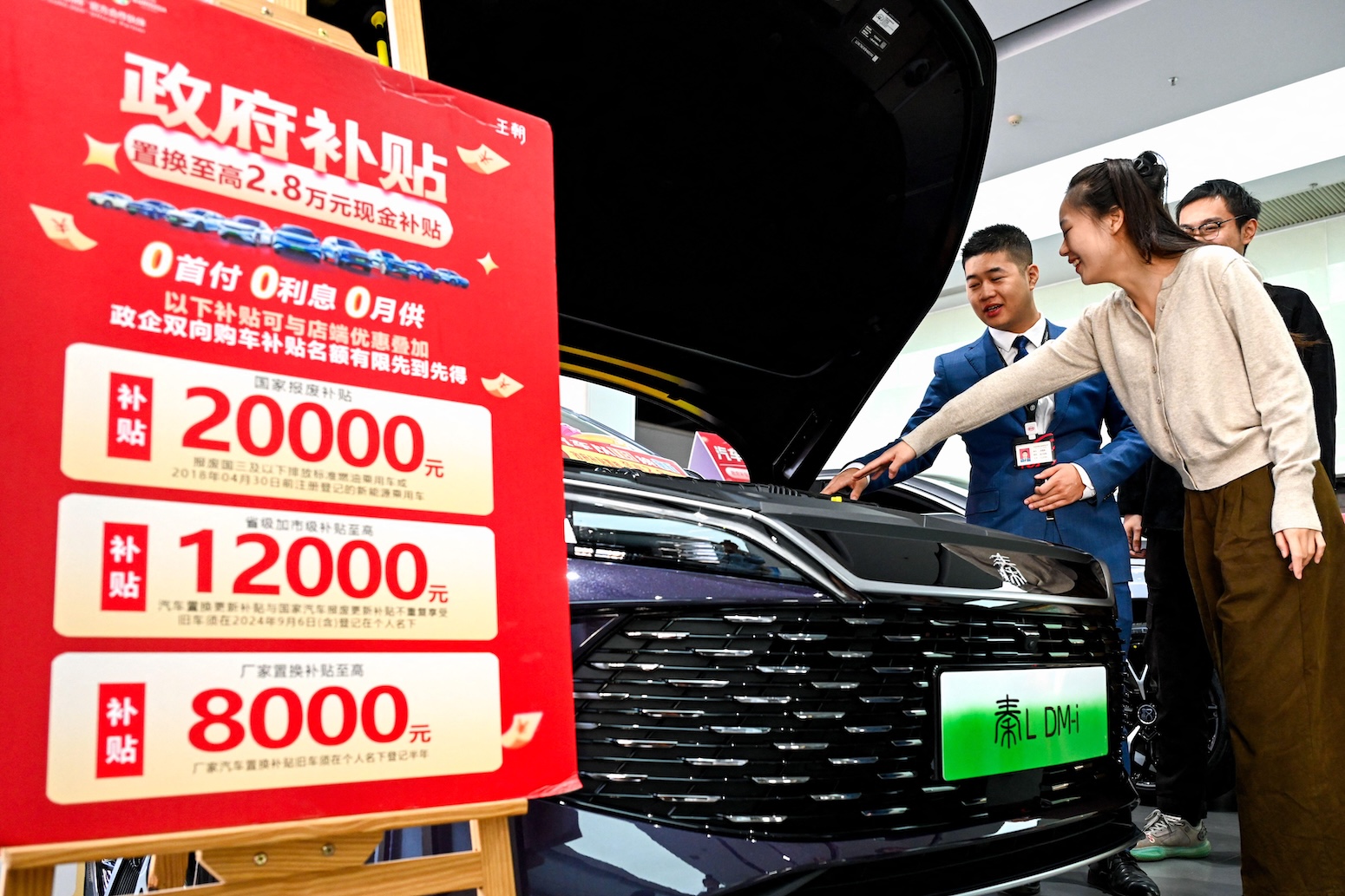
AlixPartners partner Zhang Yichao said government trade‑in policies and a strong pipeline of new models help NEVs decline more slowly than combustion cars.
Wood Mackenzie pointed to “demand pull‑forward” from 2025, tighter financing, and changes to trade‑in policies as factors behind the slowdown.
Zhang added that he does not expect NEV market share to exceed 80 %, noting that premium segments and certain use cases will continue to need combustion engines.
In sum, China’s car market is reshaping around electric power, with NEVs now dominating new sales despite a broad contraction and a surge in overseas shipments.