Martian Mystery: The Arsia Mons Elongated Cloud
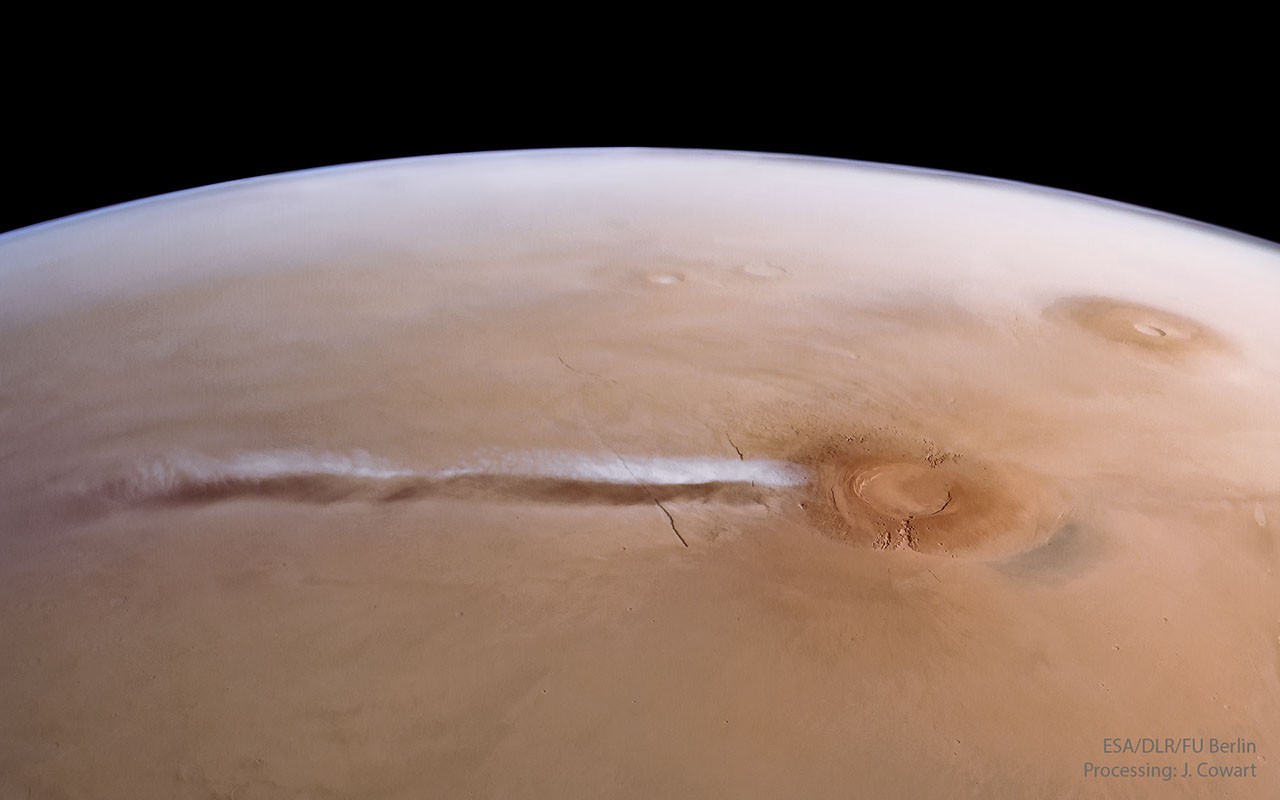
A 1500‑kilometre ice cloud over Arsia Mons appears each spring and summer morning on Mars.
What is the Arsia Mons Elongated Cloud?
The feature, known as the Arsia Mons Elongated Cloud (AMEC), was first recorded by NASA’s Viking Orbiter 2 back in 1977. Recent observations by the European Space Agency’s Mars Express spacecraft have provided sharper imagery, with the featured picture dating from 2018.
When and where does it appear?
The cloud makes its appearance only during the Martian spring and summer, and strictly in the morning hours. It originates near the volcano Arsia Mons, then wind carries it downstream, stretching the formation into a tail that can exceed 1500 kilometres in length.
What is it made of?
Unlike Earth’s typical water‑ice clouds that nucleate on dust particles, the AMEC is composed of water‑ice but forms high in the thin Martian atmosphere where dust is scarce. Leading speculation holds that dust is not involved in the cloud’s genesis.
Why does it matter?
Understanding this anomalous cloud could improve scientists’ broader grasp of cloud formation, potentially informing models of Earth’s own atmospheric processes.
A thin, dusty‑free sky still manages to paint a 1500‑kilometre masterpiece.
Further study of AMEC will continue as researchers seek to unravel the mechanisms behind this Martian oddity.