Manx Shearwaters Show Signs of Jet Lag on Atlantic Return
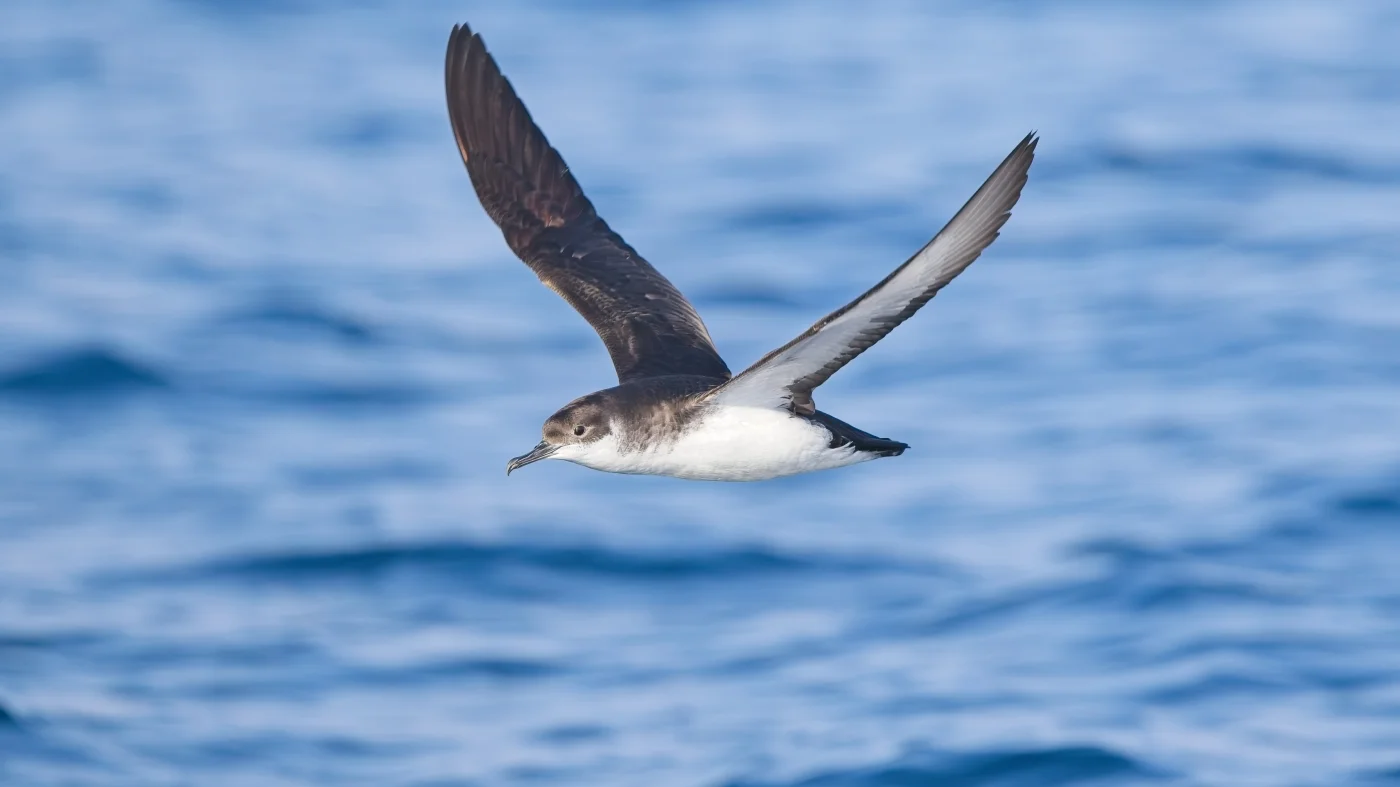
New research reveals that the seabird’s internal clock can fall out of sync with the sun during long trans‑Atlantic flights.
Whoa! A study published in Science has uncovered that the Manx shearwater, a common seabird of the British Isles, can experience a form of jet lag during its epic Atlantic crossing.
Behavioral ecologist Patrick Lewin of the University of Oxford explains that these birds, which look a bit like seagulls but are closely related to albatrosses, mate for life and lay a single egg each breeding season.
While one partner incubates the egg, the other heads out to sea, hunting for fish and squid for up to two weeks and traveling hundreds of miles across the North Atlantic.
When the foraging partner returns, it absolutely bomb[s] it back to their colony, often completing the journey in just a day.
Lewin wondered whether the rapid return might cause the birds to feel jet lag—or “flap lag.” To test this, he used GPS trackers that his team has attached to shearwaters for the past 20 years, analyzing the birds’ outbound and inbound routes.
Manx shearwaters navigate by using the sun as a compass, which requires an accurate sense of the time of day. If their internal clock is out of sync, the birds could head in the wrong direction.
The data revealed that, as the birds rushed home, they deviated slightly from the optimal path. The maximum error recorded was about seven degrees, which on a 600‑mile trip translates to roughly three extra miles—a “really small addition,” Lewin notes.
Cool! Alice Boyle, a biologist at the Centre for Animals on the Move in Ontario, Canada, who was not involved in the study, called the paper “so cool.”
These findings add a new twist to our understanding of animal navigation, showing that even fast‑flying seabirds can suffer a mild temporal disorientation similar to human jet lag.