JWST Reveals Dust‑Rich Ice Grains in Interstellar Comet 3I/ATLAS
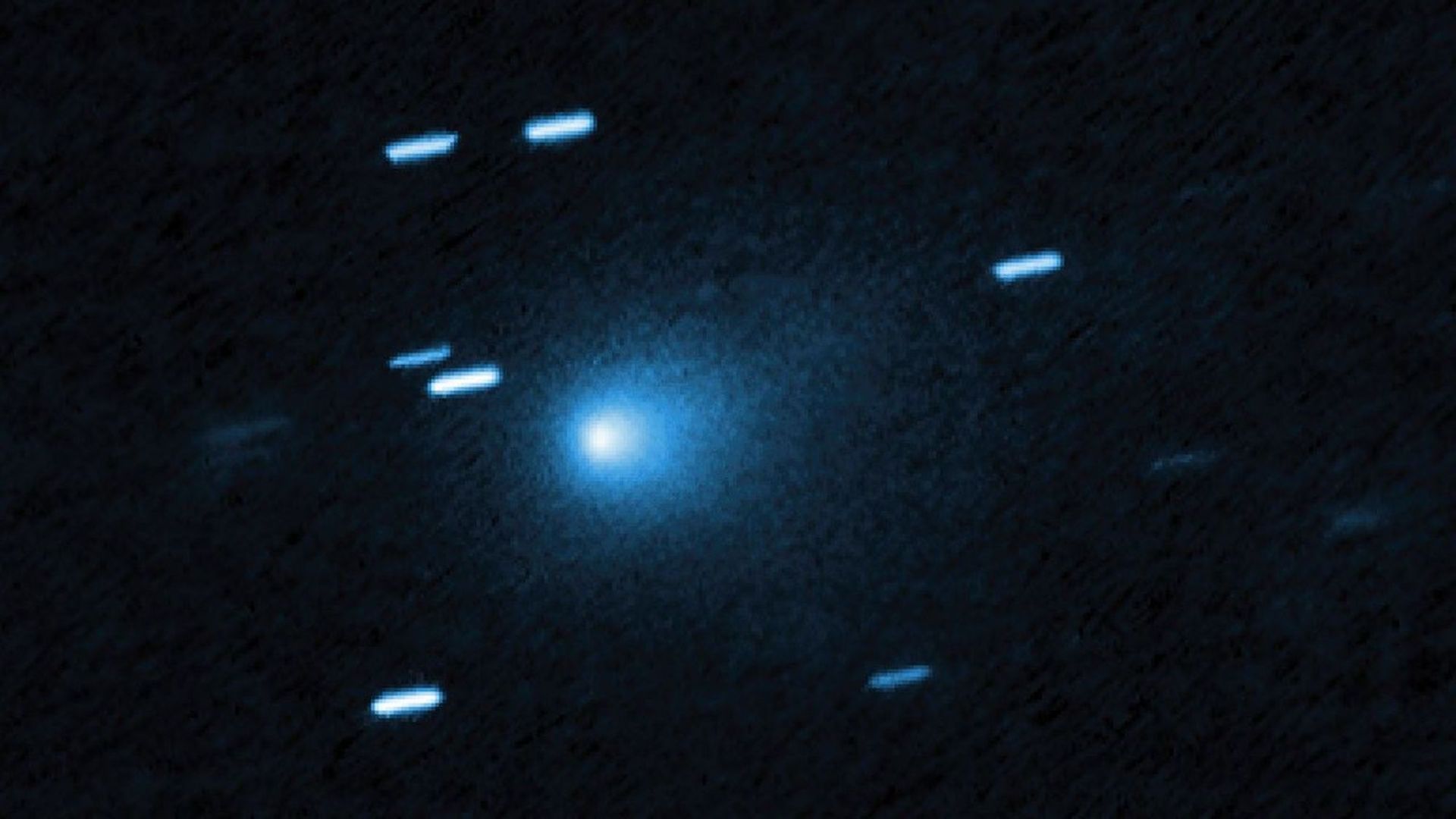
JWST observations show the interstellar comet 3I/ATLAS is made of sub‑micron, dust‑laden ice grains unlike typical solar‑system comets.
JWST Targets a Rare Interstellar Visitor
Scientists used the James Webb Space Telescope (JWST) to study comet 3I/ATLAS, the third object detected entering the solar system from interstellar space after 1I/‘Oumuamua (2017) and 2I/Borisov (2019). The comet was discovered in the summer of 2025, prompting a rapid JWST response. “We designed [JWST] to be ready the moment an active interstellar comet was found and to follow it over time,” said Martin Cordiner of NASA’s Goddard Space Flight Center and the Catholic University of America.
Unusual Ice Signature
JWST’s Near‑Infrared Spectrograph (NIRSpec) observed 3I/ATLAS three times between August 2025 and April 2026, spanning before and after its perihelion. The spectra showed a strong absorption line at three microns, typical of water‑ice, but the 1.5‑micron and two‑micron lines common in solar‑system comets were absent. The combination of a strong three‑micron band with weak or missing shorter‑wavelength bands puzzled researchers, noted lead author Silvia Protopapa of the Southwest Research Institute.
Dust‑Rich Ice Grains
To explain the spectrum, Protopapa’s team modeled the comet’s coma and concluded that 3I/ATLAS is composed of sub‑micron grains of “dirty” water‑ice heavily mixed with dust. In contrast, grains from native solar‑system comets are described as “almost pure water‑ice relatively uncontaminated by dust.” The high dust content of the grains is identified as a key clue to the comet’s birthplace, Protopapa added.
Links to Trans‑Neptunian Objects
The spectral profile of 3I/ATLAS resembles that of some medium‑sized trans‑Neptunian objects (TNOs) known to contain carbon‑dioxide ice and organic compounds. A separate 2025 JWST study led by Cordiner reported that 3I/ATLAS possesses one of the greatest carbon‑dioxide abundances ever seen in a comet. This similarity suggests that the comet formed from icy material akin to that which produced certain TNOs, implying a shared range of properties between the building blocks of planets in other systems and those in our own outer solar system.
Implications for Planet Formation
Comets are regarded as reservoirs of primordial material from the planet‑forming disks of young stars. While solar‑system comets inform us about Earth’s origins, an interstellar comet like 3I/ATLAS offers a glimpse into another star’s protoplanetary environment, potentially dating back 10–12 billion years—over twice the age of our solar system. The study proposes that sub‑micron icy grains form early in disks and later become incorporated into larger bodies such as comets and protoplanets. Protopapa summarized, At first glance, 3I/ATLAS looks different from the icy comets we know, but when we placed it alongside distant icy worlds in our own solar system, it no longer looked out of place.
Publication Details
The findings were published on Monday, October 26, in The Astrophysical Journal Letters.