Fossilised Red Blood Cells Discovered in 115‑Million‑Year‑Old Aratasaurus Bone
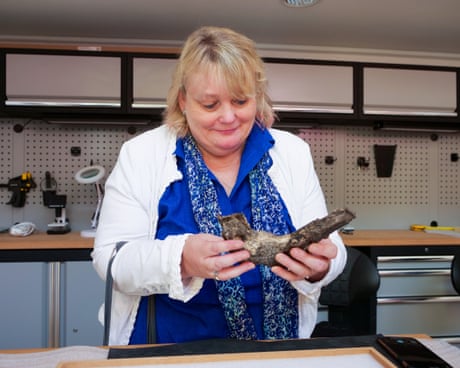
Researchers claim to have identified fossilised red blood cells and heme in a Brazilian dinosaur fossil, sparking debate over preservation limits.
Discovery claims
Scientists examining the hind‑leg bones of a small carnivorous dinosaur, Aratasaurus, say they have found structures that look like fossilised red blood cells. The bones, dated to about 115 million years ago and recovered from north‑eastern Brazil, contain tiny, round formations in fine channels that once housed blood vessels.
Electron‑microscope images reveal these formations as small, round structures that resemble red blood cells. Chemical tests on the same material returned positive results for heme, the organic compound that enables haemoglobin to transport oxygen, as well as for amino‑acid building blocks of collagen.
Research team and methodology
The work was led by Prof Kliti Grice of Curtin University in Western Australia. Grice’s team analysed the fossil, which has been stored at the National Museum of Brazil since its discovery in a mine in 2008. While inspecting the hind‑leg bones, Grice identified the cell‑like structures and pursued further testing.
Tests confirmed the presence of heme and its breakdown products, alongside traces of collagen‑related amino acids. Grice suggests that a manganese mineral called hausmannite, which formed around the cells, may have stabilised them before fossilisation, potentially aiding the preservation of both the heme and the amino acids.
Scientific controversy
Not all experts are convinced. Prof Mary Schweitzer of North Carolina State University, known for her work on dinosaur soft tissues, doubts that the observed structures are red blood cells. She notes that dinosaur red blood cells are expected to have a “nuclear bulge” that would make them dome‑shaped on both sides, whereas the structures reported by Grice are concave.
Schweitzer does acknowledge the significance of detecting heme and collagen amino acids, stating that such findings continue to challenge the “conventional wisdom” that endogenous organics disappear within a million years.
Implications and cautions
Grice stresses that the study does not claim the survival of large biomolecules such as DNA. She emphasizes that “any extraordinary claim needs extraordinary analytical evidence” and that the goal is to assess how much genuine molecular information can persist over deep time.
She adds that the real excitement lies in the possibility that museum collections worldwide may already hold “extraordinary molecular information” awaiting discovery through new analytical approaches.