The US‑China Trade Truce Masks a Growing Supply‑Chain Standoff
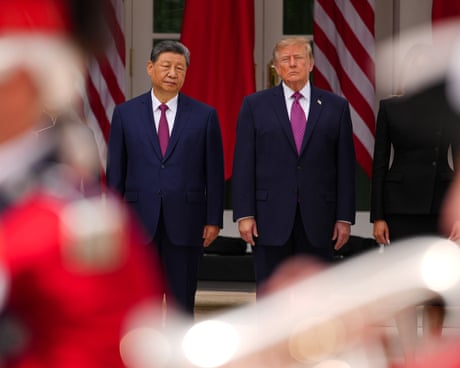
A quiet truce has halted tariff tit‑for‑tat, but both sides are quietly building a new kind of economic war.
Truce on Tariffs, Not on Hostilities
The trade conflict that once saw escalating tit‑for‑tat tariffs has been cooled by a truce reached last year and extended until next January. This pause stopped the escalation of tariffs and opened a vague path toward a future trade deal. However, neither China nor the United States has established mutual assurances to prevent new confrontations.
National‑Security Framing of the Standoff
Both governments now describe the rivalry as a national‑security priority aimed at securing economic, technological, and military supremacy. The United States, through national‑security adviser Jake Sullivan, seeks to limit China’s access to a narrow set of advanced technologies with military applications while preserving the global economic order. Sullivan described the approach as building a “small yard” of forbidden tech surrounded by a “high fence” of trade and investment controls.
Supply‑Chain Weaponisation
Unlike traditional arms races, the competition focuses on the resilience and control of international supply chains. China’s leader Xi Jinping called for tightening international production chains’ dependence on China as a deterrent against foreign supply cuts. The United States is pouring hundreds of millions into domestic mining and processing of rare earths and other critical minerals to reduce reliance on China.
China’s Leverage Over Critical Minerals
China has used its overwhelming dominance in critical minerals—essential for high‑tech civilian and military products—to retaliate against U.S. actions. Last year China throttled exports of rare‑earth magnets in response to U.S. tariffs and restrictions on high‑end semiconductors and lithography machines. While some controls have been relaxed, many remain, and China has threatened to punish other countries that try to cut dependence on its mineral inputs.
The International Energy Agency estimates that a Chinese block of rare‑earth magnets to the U.S. and Europe could cost those economies about $1.5 trillion per year.
U.S. Counter‑Measures
The current administration is accelerating projects to mine and process rare earths and other critical minerals, aiming to close China’s lead. It is also intensifying efforts to limit China’s access to frontier semiconductors and to bar the purchase of equipment needed to produce them.
China’s Export Restrictions
Beijing has announced new high‑tech export restrictions covering artificial‑intelligence chips and solar‑power technology. It has also warned of retaliation against nations that work to reduce dependence on its mineral supplies.
Outlook and Risks
A peaceful resolution would likely require a shared definition of what constitutes a legitimate national‑security risk warranting supply‑chain blocks. Defining the “yard” of restricted technology is essential to avoid treating ordinary commercial disputes as wartime actions.
China is expected to continue dominating renewable‑energy technologies, especially solar power, and may also lead the electric‑vehicle sector. While this dominance could create friction in Europe and the United States, the stakes suggest that a full‑scale war is not in anyone’s interest.
Nevertheless, China’s strategy of massive export growth paired with zero import growth is described as unsustainable for the global economy.