The Financial Engine Powering America’s Construction Surge
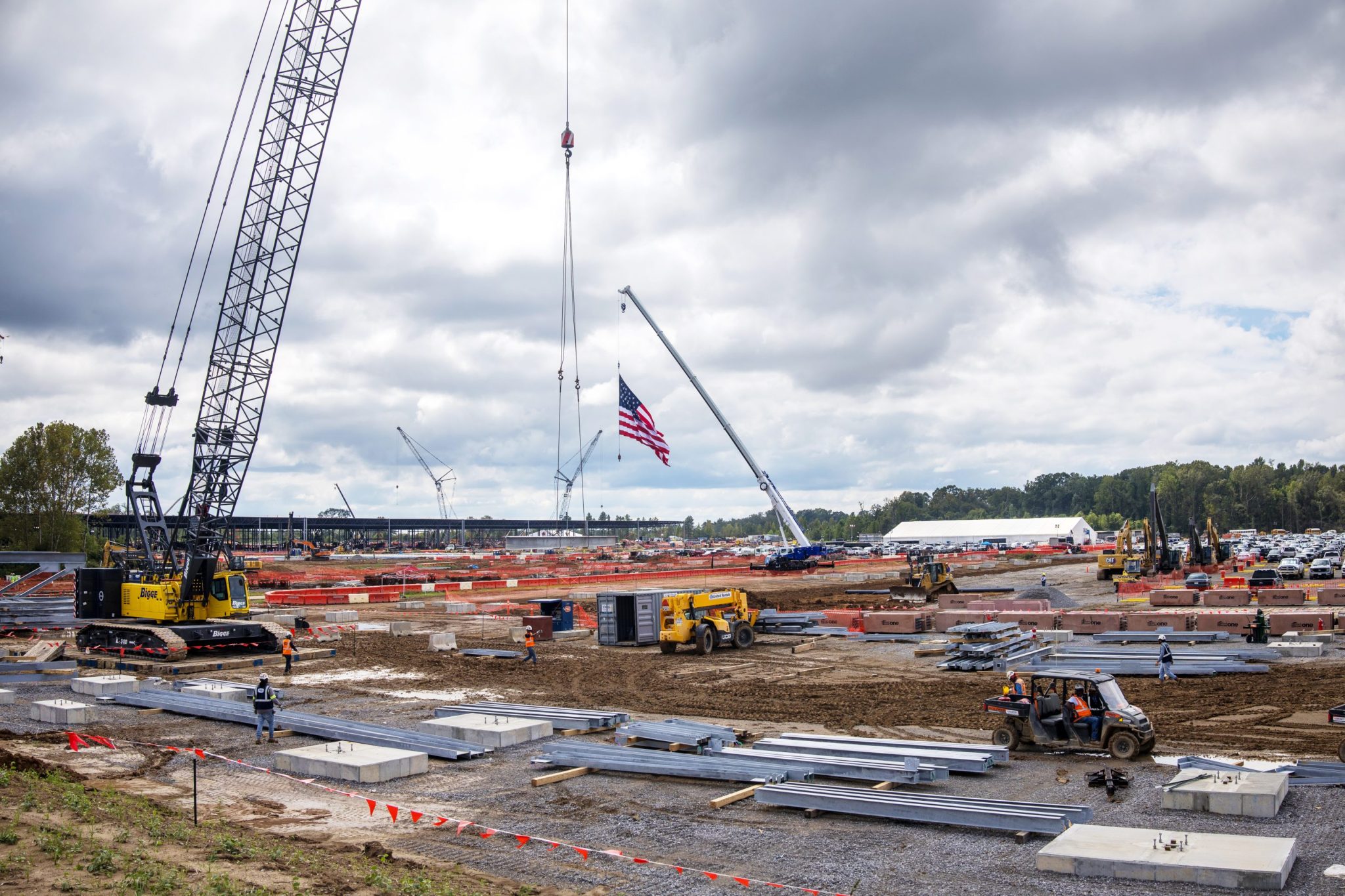
A hidden layer of reinsurance and global capital is keeping the United States’ massive building boom moving despite rising natural‑disaster risks.
Construction boom reshapes the American landscape
Across the country, new factories, semiconductor plants and football‑field‑sized AI data centers are changing the built environment. More than 1,500 data centers are currently under development, and total construction spending has risen to nearly two‑and‑a‑half times its level five years ago. This year the United States is projected to spend roughly $2.2 trillion on construction, an amount comparable to the gross domestic product of Canada.
Rising natural‑disaster exposure
Each of the past six years has seen natural catastrophes—wildfires, hurricanes and floods—generate at least $100 billion in insured losses globally, with the United States often bearing a large share. Despite this growing danger, the flow of concrete and steel continues unabated.
Reinsurance: the hidden shock absorber
Behind most major projects is a resilient financial infrastructure that manages risk and sustains investment. Reinsurance, or insurance for insurers, is a key component. In a typical scenario, a developer seeking to build an apartment complex in a hurricane‑prone area must obtain insurance. The primary insurer would need to set aside substantial capital to cover a potential storm, limiting its ability to insure other projects. By ceding part of that risk to a reinsurer, the insurer caps its exposure, frees capital and can offer coverage at a viable price.
Reinsurers spread potential losses across borders, stabilizing the system and giving investors confidence to commit capital. Swiss Re, a reinsurer headquartered in Switzerland, conducts a large share of its business in the United States, channeling foreign capital into American growth.
Historical examples illustrate the scale of international support: after Hurricane Katrina, overseas insurers and reinsurers covered more than half of the damage; after the September 11 attacks, they covered 64 % of the losses. Following the 1906 San Francisco earthquake, insurers paid more than 100,000 claims, wiping out nearly half a century of U.S. insurance market profits.
Beyond disaster protection
Reinsurance also underpins everyday economic activity. It enables businesses to hire workers while managing workplace‑injury and liability risks, supports the deployment of new technologies despite system‑failure or cyber‑attack threats, and even insures rocket launches before they leave the ground. By allowing rapid recovery from supply‑chain shocks, reinsurance bolsters America’s global competitiveness and encourages bold capital allocation.
Complementary risk‑management tools
As climate change pushes more people and assets into high‑risk coastal zones, a holistic approach to risk becomes essential. Investments in stronger infrastructure, mitigation and adaptation measures, and public‑private partnerships are needed alongside reinsurance. Financial instruments such as catastrophe bonds further redistribute risk to outside investors, expanding the pool of capital available for resilient development.
Looking ahead
With continued expansion of housing, energy infrastructure and advanced manufacturing, American companies will keep relying on reinsurers to protect their investments. The complexity of these financial structures may be invisible, but their role in keeping the economy moving amid uncertainty is vital.
The hidden financial engine of reinsurance deserves greater recognition from policymakers and the public as it fuels progress, resilience and America’s economic dynamism.