Jana Prikryl’s “The Channel” Explores the Limits of Saying What You Mean

In her new Norton collection, Prikryl mixes Shakespeare, refugee memory and multilingual play to question how poetry can ever truly convey meaning.
Opening Moves: “Chorus” and the Unspoken
“While the others spoke,” Jana Prikryl writes, “my meaning was coming through.” The line opens “Chorus,” the first poem of her fourth collection, The Channel (Norton). The “others” remain unnamed, leaving readers to wonder whether they are media, other poets or the everyday chorus of voices that fill a day.
Prikryl warns that listeners “shouldn’t suppose they expressed my views / or even the opposite exactly,” and she keeps “meaning … elsewhere … to myself.” Yet the poem is offered to readers, raising the question of how one can keep meaning private while still publishing poetry.
Why She Dislikes Easy Self‑Expression
In an interview Prikryl says, “Basically I hate poetry that pretends it’s possible to say what you mean.” She explains that the excitement of a poem lies in “prodding and questioning the words that claim to represent what my brain claims to want to be saying.” This self‑interrogation produces a “nervy, difficult style.”
In The Channel she employs run‑on sentences that stack fragmentary clauses, twisting syntax until it “squirm[s]” out of the stanza, then often stopping with a joke, a break, or silence that leaves new questions hanging.
Shakespearean Voices in a Modern Collection
Prikryl’s suspicion of straightforward expression leads her to adopt other voices, especially from Shakespeare’s King Lear. The book contains extended monologues by Cordelia and the Fool, recalling the historic practice where the two roles could be played by the same actor.
These monologues sit beside short lyrics that at first seem to be in the poet’s own voice, but the distinction blurs. In “Cliff Notes,” Cordelia declares, “Backstage I’m scribbling lyric poems / to prove there is a place where I can be.” The mingling of voices works best when the reader cannot tell whether Prikryl or Cordelia is speaking.
Cordelia’s Journey Across the Channel
Prikryl is drawn to Cordelia, the “banished favorite” who is “known as much for what she doesn’t say as for what she does.” She imagines Cordelia’s off‑stage absences, using titles such as “Dover Calais” and “Calais Dover” to follow her back and forth across the English Channel. In “Calais Dover,” an army approaches England on a passenger ferry “circa 1992,” and the speaker notes that “Anachronism makes all this possible.”
Personal History and the Theme of Borders
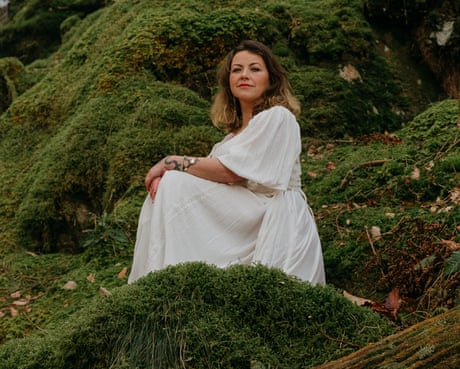
Jana Prikryl, executive editor of The New York Review of Books, was born Jana Přikrylová in Czechoslovakia in 1975. Her family fled the Communist state five years later, moving first to Austria and then to Canada. She recalls asking, “What is a country?” when her parents announced the move.
In The Channel the challenge of crossing borders appears in Cordelia’s literal fall into the English Channel, described with a “slapstick flourish.” The poem also evokes a refugee image: “The two‑year‑old / left face‑down on a beach nine years ago / came up for me.” Prikryl writes that crossing a border “takes a special kind / of willing. Assertion without basis / in history, sort of like a person.”
Language as a Shifting Identity
Prikryl’s early displacements made language feel as mutable as national identity: German replaced Czech in Austria, and English replaced German in Canada. The new collection reflects this fluidity, mixing Elizabethan diction with scientific terms such as “siliceous ooze,” “vuggy leavings,” and “coccolithophores,” and sprinkling in French and Czech.
One poem, “Haiku,” is a seven‑line piece written entirely in Czech. While readers can run its letters through Google Translate, Prikryl’s intent is to confront the “raw‑material strangeness of language.”
Family Voices and Dramatic Monologue Experiments
In “The Knots,” Prikryl narrates a visit to her father, whose dementia makes Czech more accessible to him than the English he once spoke fluently. She writes, “what’s left is tone / a style, the substance that composes him / unmellowed in the light.”
Another poem, “Some Extra,” alludes to Philip Larkin’s “This Be the Verse.” A following poem, “Letter Home,” addresses her brother, noting that “more than half the lines” are drawn from letters he sent in the early 1990s, turning the piece into an experiment in dramatic monologue.
Conclusion
Through fragmented syntax, Shakespearean borrowings, multilingual turns and personal archives, Jana Prikryl’s The Channel asks whether any poem can ever truly say what the poet means, or whether meaning must always remain partly hidden.