Global Youthquake Redraws the Map of Protest and Power
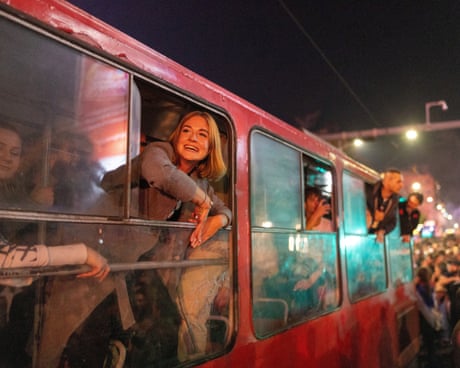
A wave of student uprisings, from France to Serbia, is challenging liberal democracy and reshaping political participation.
From Paris to Rome: The Spark of a New Youth Wave
In late 2026, French students climbed the July Column at the Place de la Bastille, a symbolic act that marked the start of the largest outbreak of student demonstrations in six decades. The momentum quickly spread, with Italian students occupying a high school in Rome and echoing the French call for change.
Protests Across Continents
Demonstrations have erupted in India, where authorities responded with repression, and in Albania, where students have been on the streets for nearly five months demanding an end to corruption and the removal of the government. The movement has also reached Indonesia, focusing on pollution, and Argentina, where austerity measures are the rallying point.
Serbia’s Student List: From Streets to Parliament
Perhaps the most consequential development has been in Serbia. The Student List of candidates for national parliamentary elections not only helped topple a long‑established, corruption‑tainted government alleged to have links with organised crime, but also secured an electoral mandate and is poised to form a new administration—an unprecedented outcome.
The group’s internal organization relies on open public assemblies with rotating delegates and specialised working groups. According to an analysis of its rules, eighty‑five student assemblies selected the candidates. Notably, the rector of Belgrade University, Vladan Djokić, was not chosen despite expectations that he would play a major role.
Croatian philosopher Srećko Horvat has likened the movement to the Paris Commune of 1871, situating it within a tradition of direct democracy. Fundraising has been modern: the campaign reportedly crowdsourced almost €2 million (£1.7 million) from more than 26,000 individual donors.
Regional Flashpoints in Europe
September and October saw youth protests over education funding in Austria, Greece and Italy; in Germany, demonstrators rallied against the threat of compulsory military service; and in other parts of Europe, housing affordability has become a flashpoint.
In Germany, a group called Gen Z regulated demonstrations in 21 cities, underscoring the breadth of the mobilisation.
Upcoming Actions
The wave shows no sign of abating. Australia plans a major student demonstration on 11 November, while student unions in Britain and Italy are coordinating a joint day of action on 20 November to protest rising education costs.
Underlying Economic and Social Pressures
Young people are confronting an AI‑driven unemployment crisis. In the UK, graduate job postings on a major employment agency have fallen from about 180,000 four years ago to 50,000 today. Employment of 18‑ to 24‑year‑olds in high‑tech sectors declined by 30 % between December 2019 and December 2025, even as the sector grew 33 %.
Governments face fiscal constraints: rising debt, defence and energy subsidies limit resources for youth‑focused spending. Across the OECD, roughly half of health and social security budgets go to people over 65, who comprise only 18.5 % of the population. Pensions account for 38 % of that spending, and older‑age health costs are also high. Meanwhile, younger generations earn a smaller share of national income, widening wealth gaps.
Analysts Weigh In
Olivier Ertzscheid, senior lecturer at the University of Nantes, notes that “young people’s sense of belonging and social interaction is at play,” with social media fostering a shared identity among protesters and amplifying momentum.
Valérie Becquet, sociologist at CY Cergy Paris University and co‑author of Geopolitics of Youth: Engagement and (e)Mobilisation, warns that the protests are evolving into a broader social movement. “There are inequalities at all levels,” she says, “with gaps widening between different social groups.”
Brown, former UK prime minister and UN special envoy for global education, argues that promises of a better future for the younger generation have been broken, putting liberal democracy itself on trial.
As the world watches, the youthquake continues to test the resilience of established political systems while offering a glimpse of alternative, participatory models of governance.






