Five Bright Planets to Spot in November – When and Where to See Them
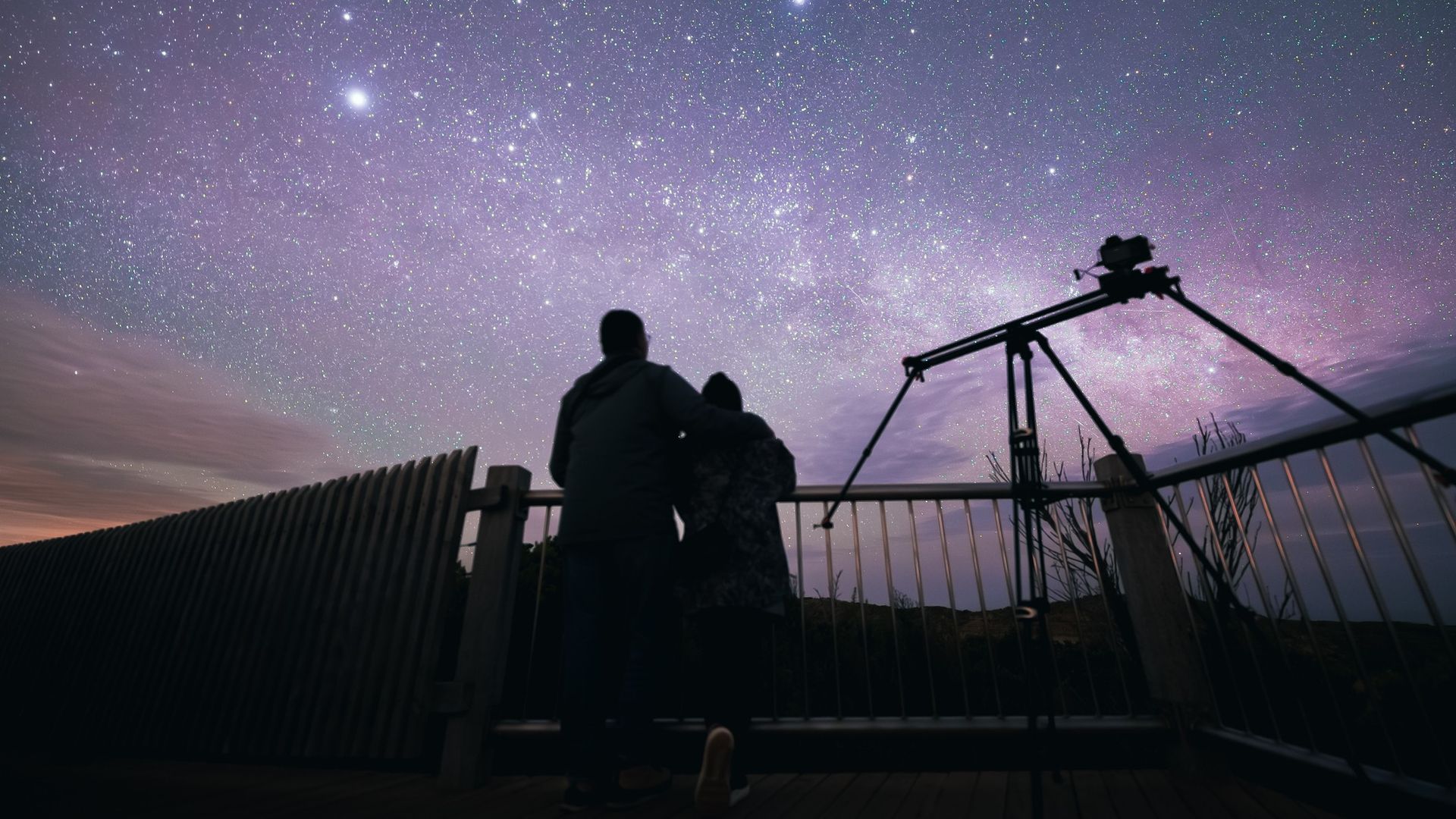
November offers a spectacular lineup of planets for both evening and morning skywatchers.
Evening Highlights: Saturn, Mars and Jupiter
Saturn shines high in the southern sky during the convenient evening hours of November. Through a telescope the southern side of its iconic rings is tilted about 6½ degrees toward Earth.
Around the middle of the night, Mars and Jupiter appear above the east‑northeast horizon. Early in the month Mars approaches Jupiter, passes it on Nov. 16, and then drifts eastward for the remainder of the month, sailing away from the bright gas giant.
Both planets sit high in the southern sky near the “Sickle” of Leo as the night deepens.
Morning Stars: Venus and Mercury
Venus is the reason to rise before sunrise. After its inferior conjunction on Oct. 24, the planet climbs higher each day. On Nov. 1 it rises 55 minutes before the Sun; by Nov. 5 observers around 40° N see it 1 hour 25 minutes before sunrise, 15° above the horizon. By the month’s end Venus rises nearly 3½ hours before the Sun and reaches a peak brightness of magnitude ‑4.9.
Through a telescope early in the month Venus shows a tiny crescent only a few percent illuminated, about 1/30 the apparent diameter of the Moon.
Venus also passes close to the first‑magnitude star Spica in Virgo. On Nov. 3 Spica sits 2.4° to Venus’s upper right; the closest approach occurs on Nov. 19 at 1.8° to the upper left. On Nov. 7 a waning crescent Moon, bright Venus and Spica form a tight trio low in the east‑southeast about an hour before sunrise.
Mercury reappears after hiding in inferior conjunction on Nov. 4. It becomes visible in the eastern morning sky after the second week and reaches its greatest western elongation of 20° from the Sun on Nov. 20, offering the most favorable morning apparition of the year for mid‑northern observers.
From Nov. 16 to Nov. 26 Mercury rises in the east‑southeast more than 95 minutes before sunrise, well before astronomical twilight.
Viewing Tips
Remember that a clenched fist at arm’s length spans roughly 10° in the sky; use this to gauge the angular separation between planets.
On Nov. 1 clocks fall back one hour, repeating the hour from 1 to 2 a.m. and making the day 25 hours long.
For those with snow on the ground, look for shadows cast by Venus’s bright light.
Enjoy the night and dawn skies this November, as five bright planets put on a show for every eager observer.