Drone Lens Captures Bangladesh Shipbreaking and Turkish Rug Sun‑Drying
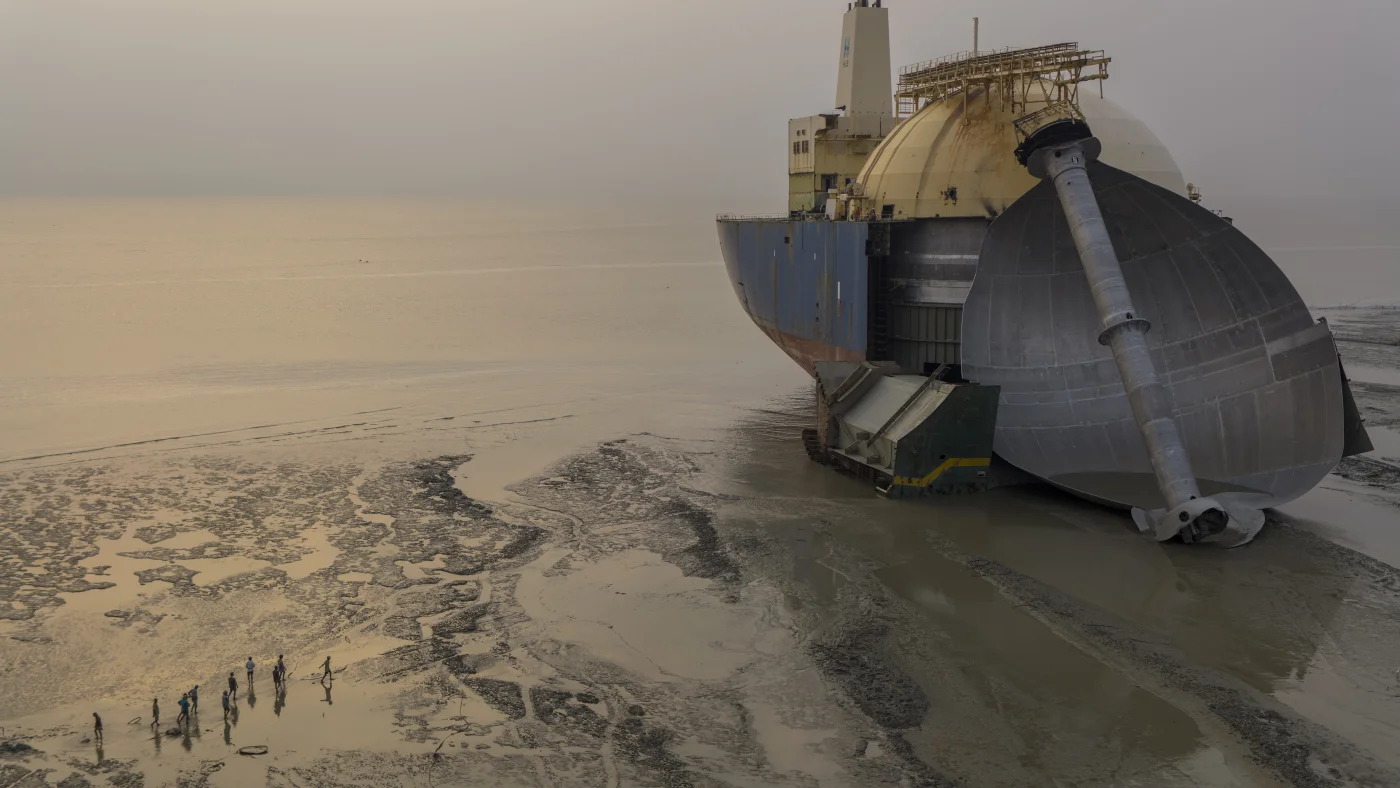
A winning drone shot of a LNG tanker being dismantled in Bangladesh shares the spotlight with sun‑bleached Turkish carpets in the 2026 Siena Drone Photo Awards.
Bangladesh Shipbreaking Takes Center Stage
George Steinmetz captured an aerial view of a liquified natural gas tanker stranded on the mudflats of the Bay of Bengal, north of Chattogram. The image, titled “Shipbreaking on the mudflats, Bay of Bengal,” won the overall prize in the 2026 Siena Drone Photo Awards.
The scene shows a crew of 60 men employing blow torches and winches to dismantle the vessel, whose steel hull is partially stripped as workers mill around it. Steinmetz spent several days photographing the ship, timing the shots for low tide when the exposed mudflats made the workers appear as tiny figures against the massive hull.
In an NPR interview, Steinmetz explained his long fascination with Bangladesh’s shipbreaking industry, describing it as a “mega‑recycling effort” that harvests tons of metal for resale overseas. He noted the difficulty of gaining access, citing warnings from local photographers and the wariness of shipyard owners toward journalists.
Steinmetz said the key was finding a vessel “in a really interesting state of disassembly,” noting that tankers of this type look “like some kind of a spaceship.” He also described the logistical choreography: workers wait for the tide, then use large winches and boats to pull pieces ashore.
Turkish Rugs Soak Up the Sun
Another highlighted photograph from the same contest shows fields in southern Türkiye where hand‑woven carpets are spread out to dry under the Mediterranean sun. The intense sunlight gradually mellows the vibrant reds, blues, and other hues, giving the rugs their “immensely sought‑after, softly faded colors.”
The image captures the traditional process of exposing the carpets for weeks or months, allowing the colors to mellow into glowing, muted tones.
From Paragliders to Drones
Steinmetz, a Stanford geophysics graduate of 1979, first pursued aerial photography with a motorized paraglider on a National Geographic‑funded Sahara project in 1996. He likens the experience to “being in a flying lawn chair or sitting on the front of a spoon.”
He says drones have now “completely transformed aerial photography,” enabling perspectives that were once “difficult, expensive or impossible to achieve.” Armed with a drone rather than a paraglider, he continues to explore how sky‑borne views reveal stories invisible from the ground.