King Charles urged to follow Dutch monarch’s slavery apology on Caribbean tour
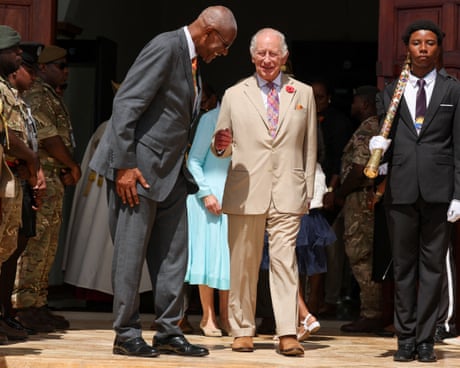
A writer challenges Charles to issue a formal apology for Britain’s role in the trans‑Atlantic slave trade while he visits the Bahamas, Guyana and Antigua and Barbuda.
Royal tour and the missing apology
During a Caribbean royal tour that includes the Bahamas, Guyana and Antigua and Barbuda, King Charles is set to express “sorrow” for Britain’s role in the trans‑Atlantic slave trade rather than issue a formal apology. The wording, the author claims, makes it easier for politicians such as Kemi Badenoch, who called an apology a “navel‑gazing distraction”, and Prime Minister Andy Burnham, who said he would support an apology while opposing reparations, to avoid taking concrete action.
Comparison with the Dutch king
Three years ago, King Willem‑Alexander of the Netherlands apologized on 1 July 2023, the day the Netherlands commemorates the abolition of slavery (Keti Koti). He described slavery as “a crime against humanity” and said the stadholders and kings of the house of Orange‑Nassau did nothing to stop it. The author notes that Willem‑Alexander’s speech was directed at people of colour and that the audience included many of the writer’s friends.
Personal context
The writer, currently on a world tour promoting the English translation of his novel Jaguarman, describes his ancestors’ survival of 300 years of enslavement. He says he was giving a lecture to a mostly white audience in a small library on the same day Willem‑Alexander addressed the nation, highlighting the contrast between public acknowledgment and private education.
Why the apology matters
The author argues that the Dutch apology was significant not only for descendants of enslaved people but also for the broader population, many of whom “thought my history had nothing to do with them”. He stresses that the truth of kidnapping, chaining, trafficking, sale and dehumanisation is already known within the colonial diaspora, but a royal acknowledgment could reach those who are unaware.
Call to action
King Charles has the opportunity to choose whether history remembers him as someone who stood in the way of truth or someone who stood with it. The writer concludes that the fire of resilience will keep burning “whether you apologise or not”, but a formal apology would be a “huge gift” to those still learning about their ancestors.