Freee Recycle’s Tyre‑Turning Factory Defies Expectations in Nigeria
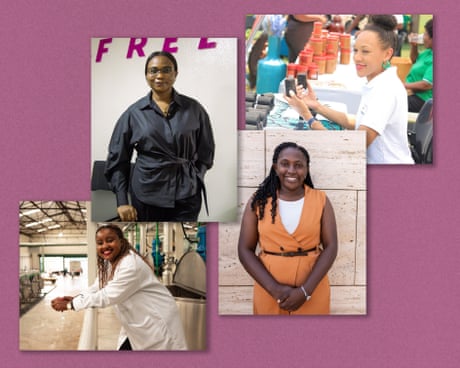
On the edge of Ibadan, founder Ifedolapo Runsewe is converting discarded tyres into playgrounds, gym floors and paving tiles while confronting financing bias.
From the outskirts of Ibadan, a bold industrial experiment is reshaping how Nigeria deals with waste tyres.
Freee Recycle’s factory receives thousands of discarded tyres, sorts them, shreds them and turns them into rubber granules. Those granules become playground surfaces, gym flooring, paving blocks and interlocking tiles.
Ifedolapo Runsewe, the founder, leads a venture in a sector where women rarely own factories or head manufacturing.
In Nigeria, women own roughly 40% of small businesses, yet 56% of their recent loan applications were denied, compared with 17% for men, according to the World Bank. Capital‑heavy fields such as recycling can magnify this financing gap.
Runsewe has built a plant that draws tyres from Oyo, Lagos, Osun and Kwara states, employing about 62 staff members.
Nigeria produces millions of waste tyres each year; many are dumped or burned to recover scrap metal, releasing hazardous pollutants.
“Burning tyres releases a complex mix of toxic chemicals – it’s not just pollution, it’s a direct public health threat,” notes Oladele Ogunseitan, a presidential chair at the University of California, Irvine.
After a 12‑year banking career, Runsewe turned to tyre recycling after witnessing the impact of burning tyres. She launched Freee Recycle in 2020, convinced that almost every part of a tyre can be recovered and reused.
The biggest hurdle has been convincing others that waste can be a viable business. Recycling tyres demands substantial capital, and converting rubber into finished products adds another layer of machinery, expertise and investment. Moreover, finding customers for the end products is essential.
“People view recycling as more of an informal, small‑scale activity rather than a serious business capable of generating substantial returns,” she says. “And that is absolutely not true.”
Runsewe also faced gender bias. “I’d go into banks and boardrooms, and investors would assume the man next to me is the owner. As soon as I spoke, the question came up: why should we give a woman millions, hundreds of millions?”
Despite these challenges, Freee Recycle continues to process tyres and produce useful materials, offering a model for environmentally‑focused entrepreneurship in Africa.





