Faculty Survey Shows Growing Self‑Censorship on DEI, Politics Ahead of Midterms

A new Inside Higher Ed survey finds nearly half of faculty feel less free to discuss key topics such as DEI and the Israeli‑Palestinian conflict.
Survey Scope and Demographics
Inside Higher Ed and Hanover Research emailed 100,296 faculty members between Sept. 21 and Oct. 8 and received 1,665 full or partial responses, a margin of error of 2.4 percentage points. The majority of respondents—1,311—work at public institutions, with 354 at private nonprofit schools. Community college professors make up 24 percent of the sample. Tenured or tenure‑track faculty represent the largest employment category, followed by non‑tenure‑track full‑timers and part‑timers.
Self‑Censorship Across Activities
Hundreds of faculty reported various forms of self‑censorship. Forty‑seven percent said they avoid extramural utterances, such as posting on Facebook, because of campus or broader political pressures. Forty‑three percent said they limit communication with students about certain topics inside and outside the classroom, and 24 percent said they hold back from researching or publishing on subjects they would otherwise pursue. Four in 10 faculty said they omit material from syllabi that they would otherwise include.
Topics Feeling Most Restricted
Areas With Less Reported Censorship
Only 11 percent felt less free to discuss contraception, down from 23 percent in 2024. Discussions of vaccines were also less restricted, with 18 percent feeling less free compared with 26 percent a year earlier.
Expert Commentary
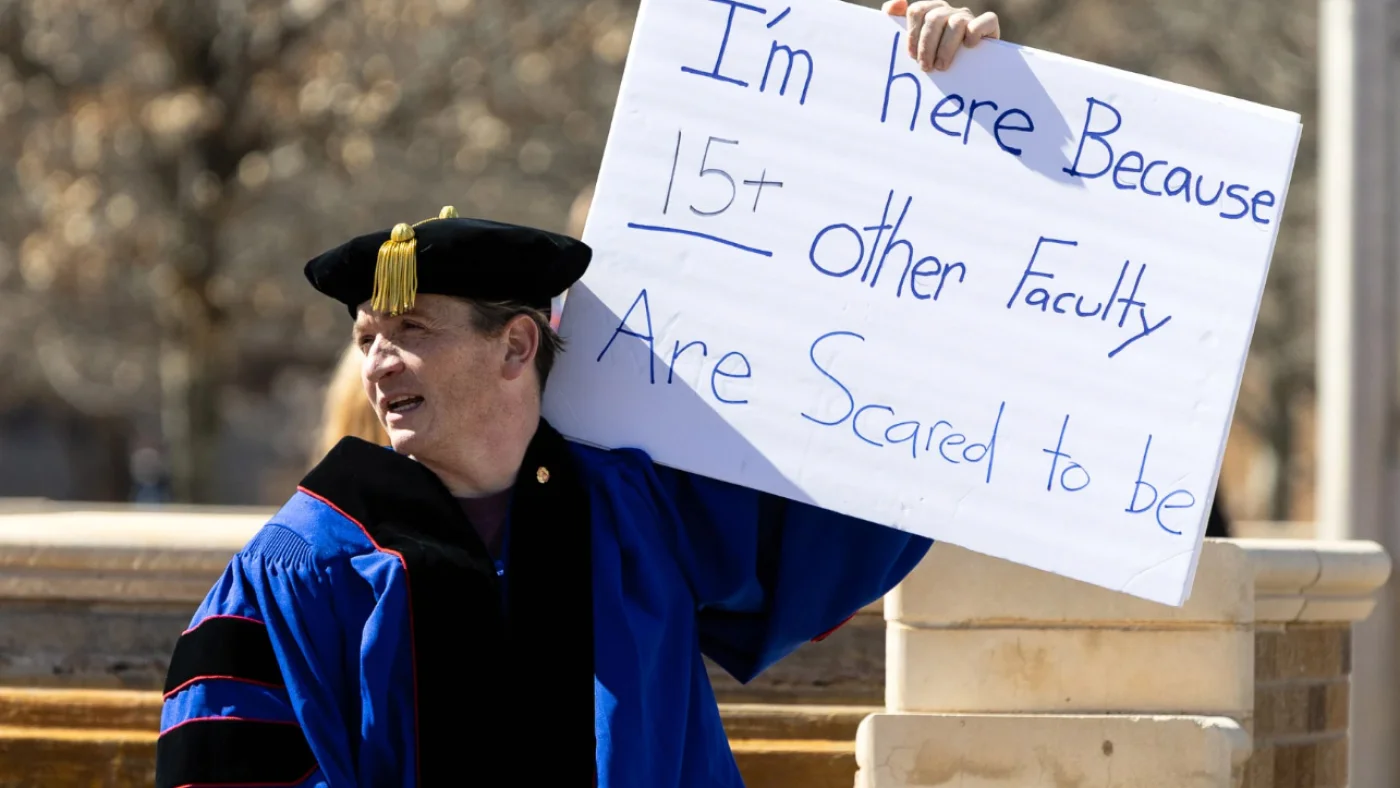
“I am not surprised that these are the topics faculty avoid the most, especially since we have seen many high‑profile cases of faculty being punished or fired for discussing them,” said Kristina Brezicha, associate professor of educational leadership at Neumann University. On DEI and Palestine, faculty have been fired or disciplined for their speech or actions on and off campus. In a polarized era of social media and secret recordings, federal politics is another area where many faculty members fear retribution for their statements.
Faculty self‑censorship appears to be rising as political and legislative pressures intensify, signaling a potentially broader shift in academic discourse.