Autumn Roadtrip Through the Peloponnese Reveals Byzantine Villages and Secluded Beaches
An off‑season drive across the southern Peloponnese uncovers historic towns, harvest festivals and crystal‑clear waters.
Setting Off From Kalamata
Leaving the leafy port city of Kalamata, the author set out on a coastal road circuit into the deep south of the Peloponnese, aiming to combine a personal connection to the area with an autumn adventure.
Autumn transforms the peninsula: pine‑filled valleys, wildflowers and limestone houses replace the typical Cycladic white and blue, while harvest festivals celebrate wines, oranges, chestnuts, figs and olives.
The weather hovers around 25°C, perfect for long walks and still warm enough for a swim.
Through the Taygetus Pass to Mystras and Parori
The two‑hour drive began with the winding Taygetus pass, where golden eagles rode above fir trees before the road opened onto the Byzantine archaeological site of Mystras.
At Mystras the author climbed the Paleologian Palace and its chapels, then descended to the village of Parori for lunch at Taverna Ores, sampling local cured pork and an okra stew while practising limited Greek with the waitress and her mother.
Sparta and Monemvasia
A brief stop at modern Sparta revealed the ancient acropolis and agora, with a statue of Leonidas facing the new city.
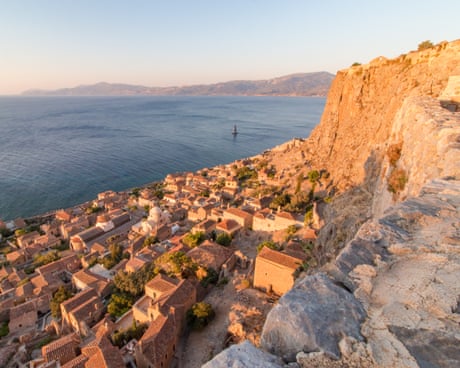
Continuing to Monemvasia, the author crossed the causeway linking the fortress island to the mainland, recalling a line by poet Yiannis Ritsos about an “ethereal bridge.”
Monemvasia’s medieval town, set inside castle walls, showcases Byzantine architecture, Venetian trade remnants and the fortified wine malvasia. The guesthouse Kelia (rooms from €70) occupies a former monks’ residence on Chryssafitissa Square.
Elafonisos and Gythio
A detour south led to the golden sand dunes of Elafonisos, accessed by a 10‑minute ferry from Pounta. The turquoise Simos beach lay deserted in the off‑season.
The author then drove to Gythio, a working harbour town with neoclassical pastel mansions and waterfront restaurants supplied by local fishers, marking the start of the Mani region.
The Mani: Vathia, Gerolimenas and Local Life
In the Mani, the banner “Victory or death” flies above the Spartan motto “With the shield, or on the shield.”
An hour’s drive to Vathia revealed rugged mountains crowned by stone‑tower villages built for clan protection; some are now ghost towns, others serve as guesthouses.
Gerolimenas became the base for exploring both coasts. The author hiked to Cape Tainaron lighthouse, the southernmost point of mainland Greece, and enjoyed an impromptu dip in the crystal‑clear water.
The Akroyiali hotel (doubles from €80) sits on the shore, allowing guests to fall asleep to the pulse of waves and the chatter of the hotel taverna.
Owner Mr Theodorakakis explained, “The Mani is changing at its own rhythm… You can actually explore the region without burning. But be careful of the north‑eastern wind.”
Areopoli, Hand‑Harvested Salt and Miralogia
Leaving Gerolimenas, a short drive up the western coast reached Areopoli, where the author bought hand‑harvested sea salt and wild oregano.
While lunching on a grassy cape, a taverna owner mentioned a local woman who knows miralogia, the wailing lament songs traditionally sung at funerals.
After two days of searching, the author found octogenarian Kaiti Braimi in a small chapel; she sang a miralogia and remarked, “In a way, they’re less necessary… No more vendettas.”
Final Thoughts
The autumn roadtrip offered a vivid mix of Byzantine history, medieval mountain villages, seasonal festivals and the quiet hospitality of locals who prefer the shoulder season.
Travelers can experience the Peloponnese’s green valleys, deserted beaches and authentic tavernas while hearing rare cultural expressions such as miralogia.